
Safety Mesh Applications in Construction: Improving Workplace Safety
Key Takeaways
- Upgrade to Rigid Infrastructure: Transitioning from disposable plastic netting to rigid steel safety mesh transforms jobsite fall protection from a fragile consumable into a highly durable, reusable asset.
- Exceed OSHA Standards: Carbon steel grating and expanded metal easily surpass OSHA 1926.502 requirements for 200-pound outward force resistance without the sagging or tension-loss risks associated with fabric nets.
- Eliminate Environmental Degradation: Unlike synthetic webbing, steel safety mesh is immune to UV rot and will not melt or catch fire when exposed to welding sparks or hot slag.
- Optimize Long-Term ROI: While steel mesh requires a higher initial investment, its ability to be dismounted, inventoried, and reused across multiple multi-year projects makes it a highly cost-effective solution.
- Demand Verified Materials: Always specify materials backed by comprehensive mill test reporting and source from reliable, localized suppliers to ensure structural integrity and timely delivery.
Walk onto nearly any commercial construction site, and you will likely see miles of high-visibility orange polyethylene netting flapping in the wind. While this lightweight material serves a basic visual purpose, it falls dangerously short when subjected to the severe physical demands of heavy commercial construction. True jobsite protection requires foundational infrastructure that exceeds standard personal protective equipment.
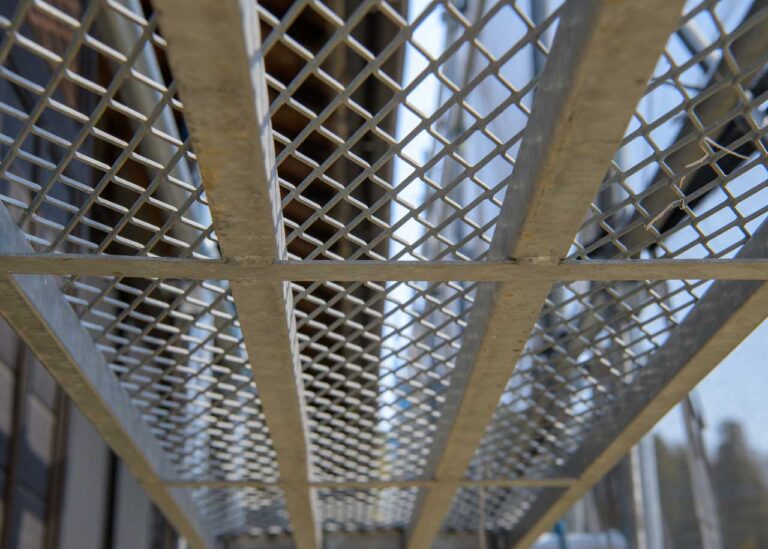
For high-risk vertical zones, deep trenches, and multi-year project scopes, top-tier safety directors are transitioning away from disposable plastics. Instead, they are specifying rigid steel safety mesh. By utilizing heavy-grade expanded metal and steel grating grids, project managers can guarantee maximum fall protection, eliminate weather-related material degradation, and transform a disposable safety expense into a reusable project asset.
Core Applications for Structural Safety Mesh
The applications for rigid construction safety netting extend far beyond simple visual perimeters. In large-scale commercial builds, safety barriers must act as physical barricades capable of stopping heavy machinery, deflecting falling tools, and supporting the weight of personnel.
One of the most critical safety mesh applications in construction is the securing of floor cut-outs. Elevator shafts, floor trenches, and large skylight openings require 100% stable temporary safety covers. A flexible net will sag under the weight of a falling worker or heavy equipment, potentially causing secondary impact injuries. Rigid steel safety mesh, conversely, provides an unyielding barrier that keeps the hazard completely sealed.
Exterior structure edges also benefit immensely from expanded metal site guarding. On high-rise projects, particularly along the East Coast, fierce cross-winds can turn billowing fabric nets into a liability, tearing them from their anchors. Steel safety mesh allows wind to pass through its openings while maintaining absolute structural integrity. Furthermore, the rigid grid prevents heavy tools from rolling off elevated decks, mitigating the risk of fatal drop-strikes.
Essentially, heavy-duty metal safety mesh is essential for machine guarding. Enclosures around large temporary jobsite equipment, such as hoist bases, high-voltage generation arrays, and industrial compressors, require barriers that can withstand blunt-force impacts. Expanded metal provides high visibility for equipment monitoring while ensuring unauthorized personnel and stray materials cannot breach the mechanical zone.
Meeting Safety Codes: Standard Thresholds for Fall Protection Meshes
When engineering a safe jobsite, compliance is the baseline, not the ceiling. However, understanding the exact legal thresholds is critical for specifying the right materials. Under OSHA 1926.502 guardrail and mesh specifications, fall protection systems must be capable of withstanding a minimum of 200 pounds of force applied in a downward or outward direction within two inches of the top edge.
While heavy-duty nylon webbing can technically meet this requirement when perfectly tensioned, it introduces a high margin of error. Tension straps loosen, anchors slip, and the material stretches. Rigid fall protection panels made from carbon steel grating eliminate this ambiguity. A properly welded or bolted steel barrier easily exceeds the 200-pound threshold, providing a massive factor of safety that guarantees compliance regardless of minor installation variances.
Opening sizes are equally regulated. OSHA mandates that screens and meshes must prevent the passage of tools and materials that could strike workers below. When utilizing expanded metal safety barriers, safety engineers can specify exact diamond opening dimensions. A heavy-gauge expanded metal sheet with micro-openings ensures that even small items, like heavy bolts or spud wrenches, cannot slip through the gaps. Because pre-certified, rigorously inspected metal grating offers predictable, engineered load capacities, safety managers often find that steel systems ensure much faster audit passages than checking the tension of stressed fabric straps.
Expanded Metal vs Flexible Webbing: Why Rigid Rules Modern Projects
The difference between rigid steel mesh and flexible safety nets becomes glaringly obvious when evaluating long-term project durability. Commercial construction projects often span three to five years. Over this timeframe, flexible webbing is subjected to intense ultraviolet (UV) radiation. UV rays break down the polymers in plastic and nylon, causing the nets to become brittle, rot, and eventually fail under pressure. Steel safety mesh is entirely immune to UV degradation, ensuring the barrier is just as strong on day one thousand as it was on day one.
Fire safety is another critical differentiator. Commercial sites are highly active environments featuring welding, cutting, and grinding. Hot slag and sparks will instantly melt through synthetic safety netting, compromising the fall protection system and creating a secondary fire hazard. Carbon steel expanded metal inherently possesses high-temperature resistance, maintaining its structural integrity even when exposed to direct sparks and localized heat.
From an economic perspective, rigid metal panels introduce the “Asset, Not Consumable” framework. Soft safety netting is a sunk cost; at the end of a project, it is cut down, thrown into a dumpster, and hauled to a landfill. While raw expanded steel grids may have slightly higher initial material costs, their reusability flips the financial model. Rigid metal screens can be easily dismounted, inventoried, and transported to the next jobsite. Over the course of three or four projects, the return on investment for steel grating vastly outperforms the continuous repurchasing of disposable nets.
Specifying Materials For Success on Heavy Construction Footprints
Selecting the right metal safety mesh for construction requires an understanding of structural mechanics and material grades. The Expanded Metal Manufacturers Association (EMMA) provides strict guidelines regarding tolerances and yield strengths. When specifying materials, engineers must decide between heavy-gauge flattened expanded metal and standard thick carbon wire grate. Flattened expanded metal is ideal for high-contact areas where a smooth surface is required to prevent snagging, while standard raised expanded metal offers superior slip resistance and structural rigidity for floor coverings.
Regardless of the specific profile, reliable raw material verification is non-negotiable. Safety systems are only as strong as the steel they are built from. Procurement teams must demand comprehensive mill test reporting to verify the carbon content, yield strength, and shear force resistance of their safety mesh.
Finally, bulk procurement logistics play a massive role in project scheduling. Heavy commercial builds require massive quantities of safety mesh delivered precisely when the structural framing is completed. Securing a supply chain partner localized near key high-demand construction corridors ensures that your safety infrastructure arrives on time, preventing costly work stoppages.
When your project demands uncompromising safety, it is time to upgrade your materials. Intsel Steel East offers a comprehensive inventory of heavy-duty expanded metal and steel grating capable of meeting the most rigorous structural safety demands. Contact our regional representatives today to align your project’s custom safety mesh stock delivery scheduling before your next major deadline kicks off.