Steel Processing Services That Boost Construction Profits & Efficiency
Key Takeaways
- Moving steel processing from the unpredictable construction site to a controlled workshop environment is a primary driver of efficiency.
- Advanced services like CNC cutting, cambering, and in-shop painting deliver ready-to-erect components, drastically shortening project timelines.
- Precision processing minimizes material waste and reduces the need for expensive on-site labor for modifications and finishing.
- By reducing on-site fabrication, you minimize crew exposure to hazardous tasks like cutting, welding, and grinding in a congested environment.
- Select a processor with advanced technology, verifiable certifications, and deep construction industry expertise to maximize benefits.
The modern construction industry demands efficiency in order to be successful. Every project manager, engineer, and contractor knows the pressure of delivering on time and within budget. Yet, industry data reveals a stark reality: a staggering nine out of ten construction projects experience cost overruns, often tied to unforeseen delays and on-site complications. The critical question is no longer just how to build, but how to build smarter, faster, and more cost-effectively.
The answer may lie in a place many overlook: the strategic use of steel processing services. Far from a simple commodity, advanced steel processing is a powerful lever for optimizing project timelines, reducing waste, and enhancing structural integrity from the ground up. This article explores how leveraging the right steel processing services transforms raw material into a high-performance asset that drives tangible results on the job site.
The Strategic Shift from Raw Steel to Processed Solutions
Traditionally, a significant amount of steel modification like cutting, drilling, and finishing, occurred on-site. This approach, while functional, introduces numerous variables that can compromise efficiency. On-site fabrication is labor-intensive, weather-dependent, and creates logistical challenges with space and material handling.
The modern construction landscape demands a more streamlined approach. Off-site steel processing shifts these critical preparatory steps from the unpredictable environment of the construction site to a controlled, technologically advanced workshop. By delivering steel components that are pre-cut, shaped, and finished to exact specifications, projects can move directly from delivery to erection, eliminating entire phases of on-site labor and potential delays. This evolution marks a fundamental shift from viewing steel as a raw material to be dealt with on-site to a custom-engineered solution that arrives ready for assembly.
Core Steel Processing Services and Their Efficiency Benefits
Each process offers more than just a physical change to the steel; it provides a direct benefit to the construction workflow.
Precision Saw and Plate Cutting
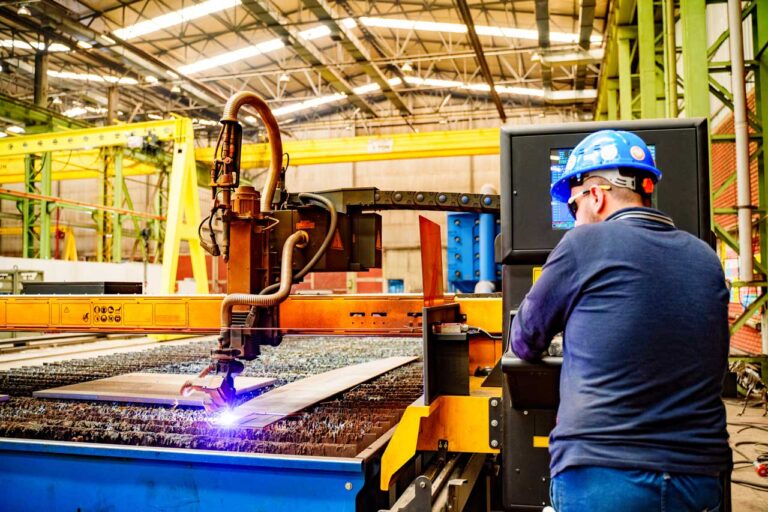
At its most basic, steel must be cut to size. But advanced saw and plate cutting services offer a level of precision that is nearly impossible to replicate in the field. Using computer-numerical controlled (CNC) equipment, processors can execute highly accurate cuts for beams, tubes, and plates, ensuring components fit perfectly upon arrival.
- Efficiency Impact: This eliminates the need for time-consuming on-site adjustments and reduces material waste from manual errors. It allows for faster assembly and a cleaner, safer work environment.
Cambering and Curving
Cambering involves creating a slight upward curve in a beam to counteract the deflection that will occur once it’s under load. This process is essential for maintaining the structural integrity and levelness of floors and roofs over long spans.
- Efficiency Impact: Engineered cambering allows designers to use steel beams more efficiently, often reducing the overall weight and amount of steel required for a structure without sacrificing strength. This not only lowers material costs but also simplifies the erection process with lighter components.
Tee Splitting and Straightening
Tee splitting involves splitting a wide-flange beam lengthwise to create two T-shaped beams. It’s an efficient method for producing custom structural shapes that are both strong and lightweight.
- Efficiency Impact: Tee splitting provides architects and engineers with greater design flexibility while optimizing material usage. The resulting custom components can lead to more efficient structural systems that are faster and easier to erect than those built from standard, off-the-shelf beams.
The On-Site Impact: Translating Services into Project Success
When these processing services are integrated into a project plan, their collective impact creates a powerful ripple effect across the entire construction lifecycle.
Accelerated Project Timelines
The most significant advantage is speed. When steel components arrive on-site ready for immediate erection, the entire construction sequence is compressed. There’s no need to allocate time and space for manual cutting, welding modifications, or coating applications. This just-in-time delivery of assembly-ready materials allows teams to meet and even beat aggressive project deadlines.
Reduced Labor Costs and Increased Safety
Shifting fabrication work off-site directly reduces the on-site labor required. Fewer hours are spent on manual modifications, grinding, and painting, leading to significant cost savings. Furthermore, this reduces the crew’s exposure to some of the most hazardous aspects of steelwork. A controlled workshop environment is inherently safer than an active construction site, minimizing risks associated with cutting, welding, and material handling.
Minimized Material Waste
Precision, computer-guided processing in a workshop setting is exceptionally efficient. Material usage is optimized, and the scrap generated is minimal and easily recycled. Compared to the waste often produced by manual, on-site cuts and adjustments, off-site processing is a more sustainable and cost-effective approach.
How to Choose the Right Steel Processing Partner
Not all steel processors are created equal. To truly leverage these efficiency benefits, it’s crucial to partner with a provider who acts as a strategic ally, not just a vendor. Look for these key attributes:
- Advanced Technology and Equipment: A top-tier partner invests in modern, CNC-driven machinery for cutting, drilling, and finishing. This technology is the foundation of the precision, consistency, and speed that drive on-site efficiency.
- Deep Industry Expertise: Your processor should understand the unique demands of the construction industry. They should be able to read complex blueprints, anticipate project needs, and collaborate with your engineering and design teams to identify opportunities for optimization.
- Verifiable Quality Control: Look for certifications from established industry bodies, such as the American Institute of Steel Construction (AISC). AISC certification ensures that a processor adheres to rigorous standards for quality, safety, and procedural excellence.
- Integrated Logistics: A great processing partner has logistics down to a science. They should be able to manage complex delivery schedules and ensure that the right materials arrive at the right time, sequenced for efficient erection.
Building More Efficiently with Strategic Steel Processing
In this competitive construction market, efficiency is everything. Steel processing services offer a clear and proven path to optimizing timelines, controlling costs, and improving project outcomes. By moving critical fabrication and finishing tasks from the job site to a controlled, high-tech environment, you can reduce variables, mitigate risks, and empower your on-site teams to work faster and safer.
The key is to view steel not as a starting point for on-site work, but as a fully engineered component of your project. By selecting a knowledgeable and well-equipped partner, you transform a simple material purchase into a strategic investment in construction efficiency.
Ready to streamline your next project? Contact Intsel Steel East to learn how our steel processing services can be tailored to your exact specifications.